
Fueling issues with the 1098R
While racing the 1098R for a number of years at various tracks around the nation. Below I describe the fueling problems which arose with the OEM system and what I did to solve them.
Fuel tank expanding with ethanol fuel
The OEM fuel tank was made of a material that would expand when exposed to ethanol contaminated fuel.
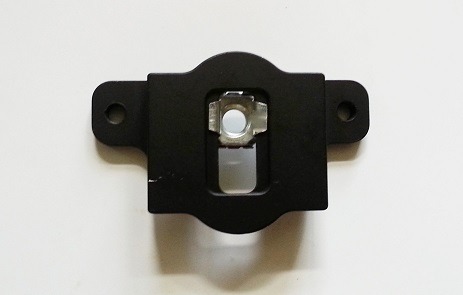
This expansion would make it almost impossible to fit the rear mount, so an aftermarket adjustable mount was developed.
There was also a lawsuit filed against Ducati related to this issue sometime in 2015. A link to the discussion is .. https://www.ducati.ms/threads/1098-gas-tank-law-suit-info.536985/
Internal fuel line slipping off OEM pump outlet
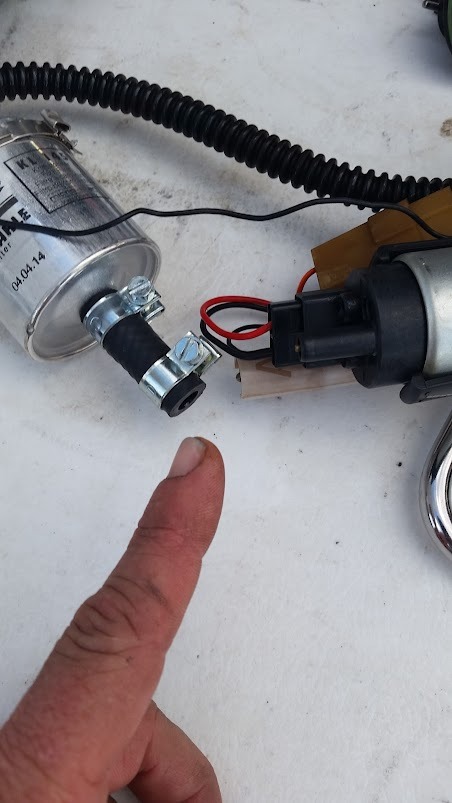
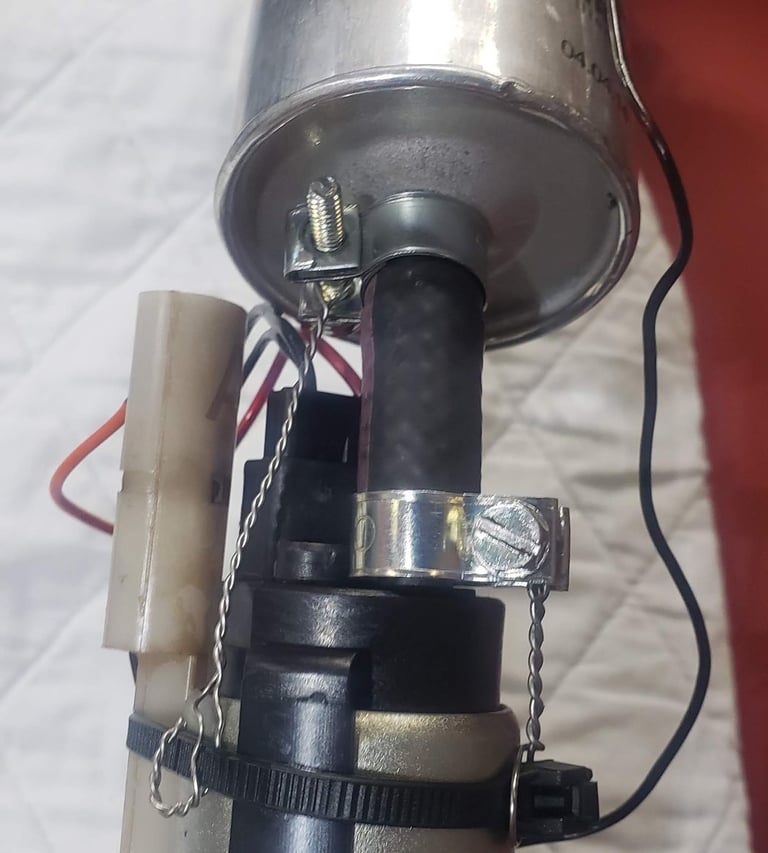
The OEM fuel pump outlet is a small plastic nipple lacking features to internally grip the fuel line. As a result, the fuel line can slip off of the fitting obviously causing the engine to quit. This happened to me twice during the 2014 race weekend at UMC during an AHRMA event.
This can be a particularly puzzling failure on stock bike lacking the ability to detect a drop in fuel pressure. The pump will continue to run and the tank will show adequate fuel, but the fuel will just be circulating inside of the tank. (I was able to use a flashlight to see fuel moving inside the tank).
I tried a couple of different clamping solutions and ended up with both better quality clamps and safety wire ran in parallel to the fuel line to prevent the hose from slipping off of the fitting. Certainly a more elegant solution could be found, but this seemed to work for many years of track usage afterwards.
High demand fuel pressure drop
My 1098R motor build included quite a few modifications (cams, intake, different injectors, remapping) that under certain race conditions could demand a lot of fuel.
I found this issue at Road America during a CCS race weekend in July 2014. Ben and I had been chasing a lean condition for several sessions before he suggested we take a look at fuel pressure.
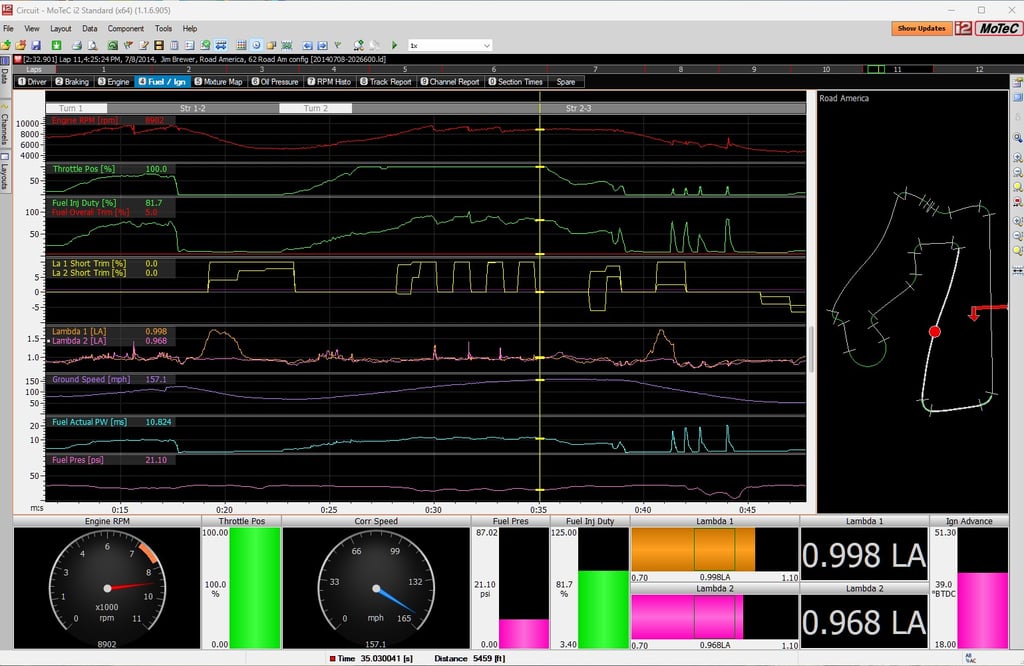
The Motec data below shows the problem. Between turns 4 & 5 is a long straight where you're in top gear wide open for quite some time. Additionally this is at very low altitude, so the demand for fuel is high. The Motec M880 and SDL proved invaluable to solve this.
DAQ graph observations
There are lean conditions for both cylinders (target is 9.3).
The closed loop/wideband lambda trims (yellow lines) show that the system hunting and trying to add more fuel to compensate (capped at 10% trim) but it's not able to settle in to a trim.
The Fuel injector duty cycle is 82% which is on the edge of its operating range, which contributed to the inability to trim fuel effectively.
The biggest problem is the low fuel pressure. Here it's 21.1 PSI, which is too low for those injectors. Even at it's best it was around 30 PSI which is well off of the 40-50 PSI it should be.
Also notice the fuel pressure drop during the downshifts (and braking). More on that later.
(Aside - Ben already abused me about my crappy riding going into 5, so feel free to pile on via email if you want)
Solution
Ben had seen this problem in Ducatis before and had an answer.
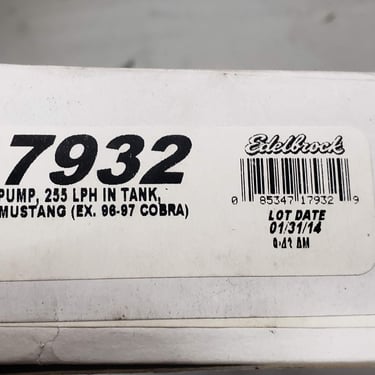
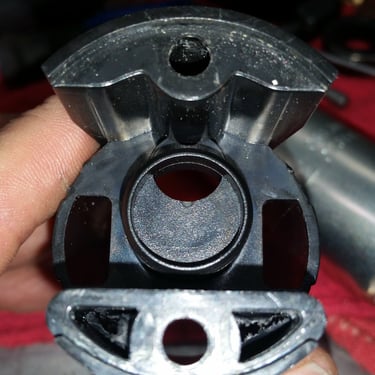
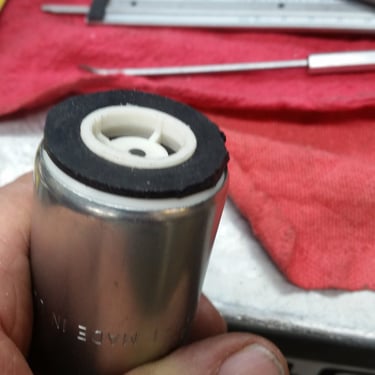
Turns out the Bosch OEM pump is kind of wimpy. Ben cross referenced the pump to the Edelbrock version shown below that fits a 85-87 Mustang and has a much better flow rate.
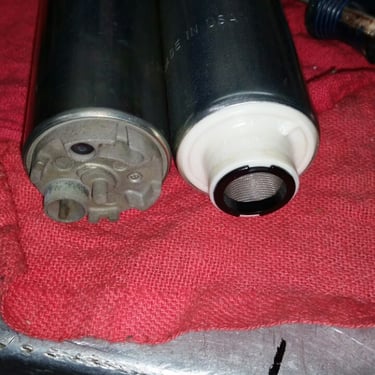
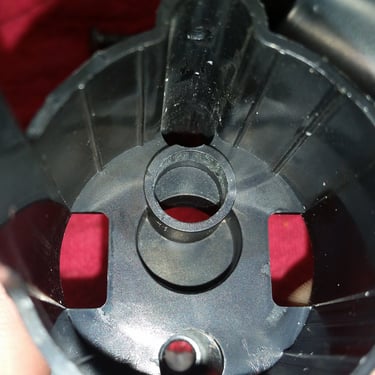
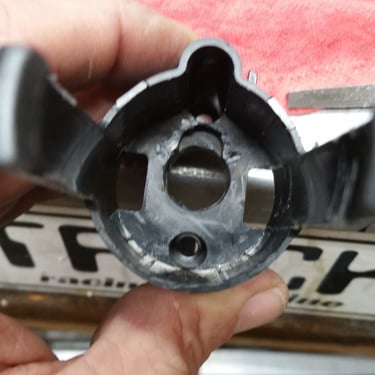
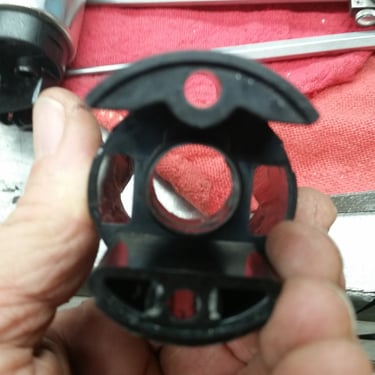
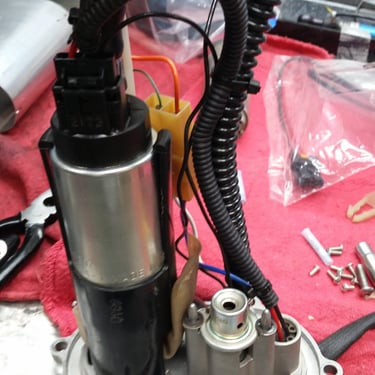
That pump has a slightly different pick up location, so some modification was needed for the OEM plastic mount and the screen pick up. That only took a little work with a Dremel tool. The fuel outlet and the electric connectors worked just fine.
The photos are - the Edelbrock fuel pump (equivalents would probably work) and comparison of the fuel pickup end of that pump against the OEM pump, mounting bracket mods before & after, a small sealer gasket on the bottom of the pump, and the finished unit looking almost unchanged.
Pressure drop on hard braking
This was another problem that would have been hard to find without the Motec DAQ system.
I first noticed that sometimes the bike would stumble badly exiting certain corners on the track. It didn't happen all of the time which really threw me off. It felt like there was a lean condition but looking at the fueling and trims didn't show anything.
After gathering more data, I noticed that there were intermittent fuel pressure drops in the corners where I felt the exit stumbling. I couldn't figure out why the fuel pressure would drop for just a few seconds, then come right back up. I tried running with more fuel in the tank and that solved the problem, but in longer races, the stumbling would return late in the race (which can be incredibly frustrating as you might imagine).
So I noticed it in a couple of particular corners of the track. I can't remember what made me graph these together, but when I put fuel pressure (red line) and brake pressure (purple line) on the same graph something jumped out at me.
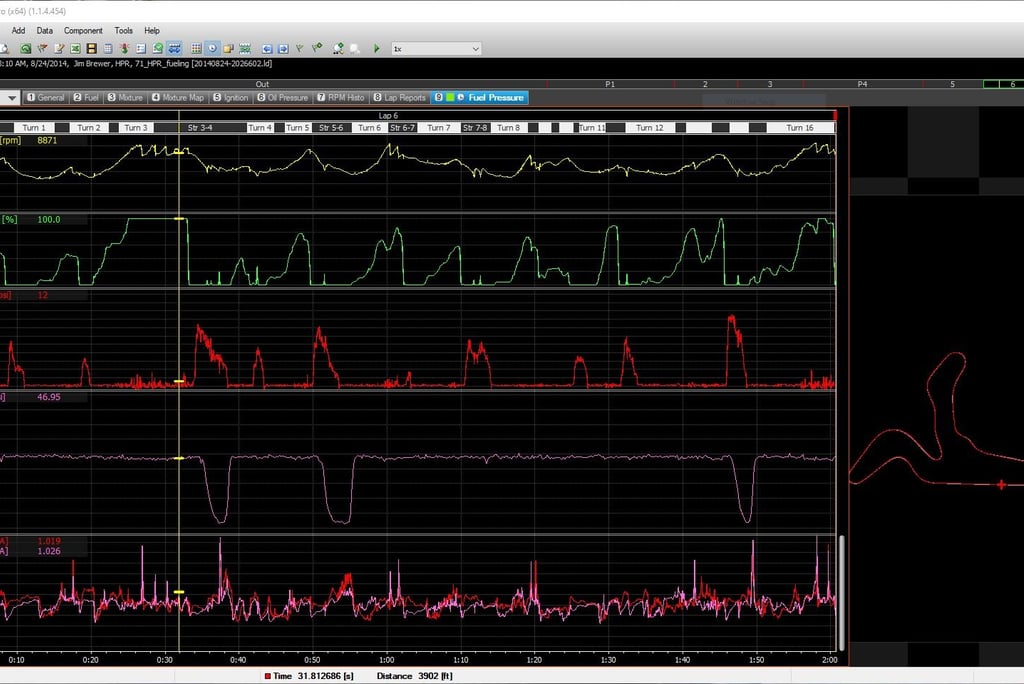
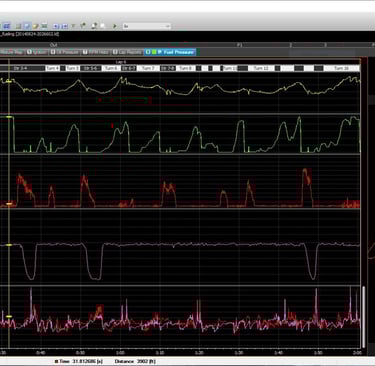
The fuel pressure drops during hard braking. It doesn't happen as much when the brake pressure is a little lower but it's really dramatic in heavy braking zones.
The conclusion was that the fuel in the tank was sloshing to the front of the tank away from the pump pickup. It didn't happen when there was enough fuel in the tank to keep it all in place, but once it got below about 1/3 of a tank, the pressure would having the dropouts.
So for a couple of weekends, I just ran with more fuel than I needed for the majority of the races. In one event I ran (Race of the Rockies) I would start getting low on fuel late in the race and the stumbling would come back. ARGGG!!!
Race cars and some race bikes will run foam inside of the tank to prevent this sloshing, so my first try was to get some of these, stuff the tank with them, and see what happened.
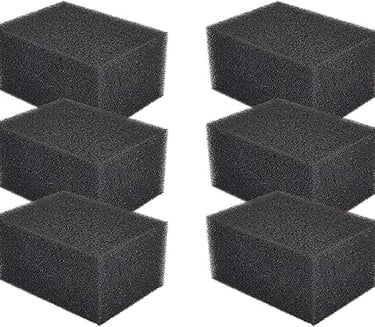
After trying those and gathering more data, I found out that they really didn't solve the problem. Basically, what they did was just change how the problem occurred.
At start of braking, they would start absorbing the fuel preventing some of it from sloshing forward. But as braking went on, the fuel would still migrate away from the pickup into the foam.
Then after braking, the foam would keep the fuel trapped delaying it from returning to the pickup, so the stumbling problem was still there. The foam just shifted the pressure drop to start later, but also made it take longer to recover, which was actually worse.
So Ben pointed out in the auto world they have these devices called swirl pots to prevent the sloshing.
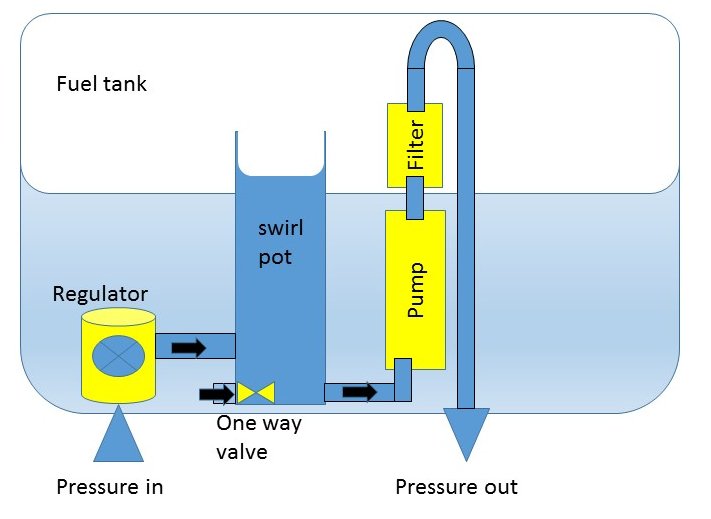
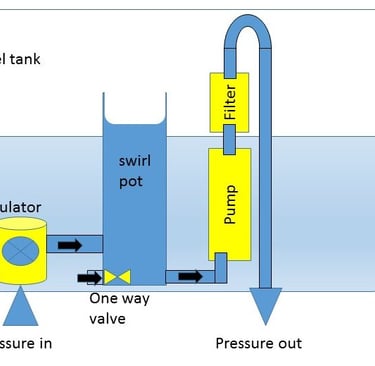
This would work, but it was a impractical to have such an external device in the bike.
Solution
I remembered what Suzuki did to their fuel pump housing on my previous TL1000R racebike. They enclosed the fuel pump in a housing that kept the fuel near the pickup.
So I designed a pretty simple aluminum sheet to surround the Ducati fuel pump assembly with a slot on the back of the housing to allow fuel to get to the pickup but not slosh forward.
My thinking was that under braking, the enclosure would keep enough fuel around the screen to keep the pressure up until corner exit happened. Since the throttle is closed that entire time, it wouldn't have to be much fuel, just enough to get off of the brakes and through the corner.
Below shows the aluminum enclosure with the slot that goes toward the back of the tank. I used some fuel based RTV and a couple of drilled and tapped screws to hold it in place on the fuel pump mount. The last photo is looking down into the tank.
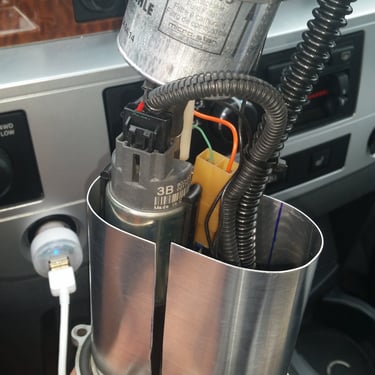
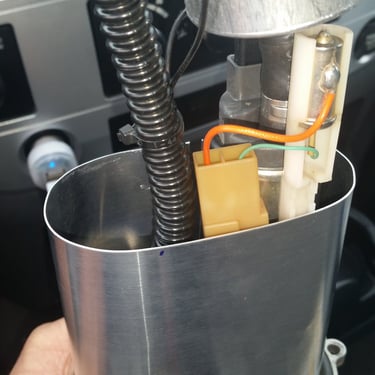
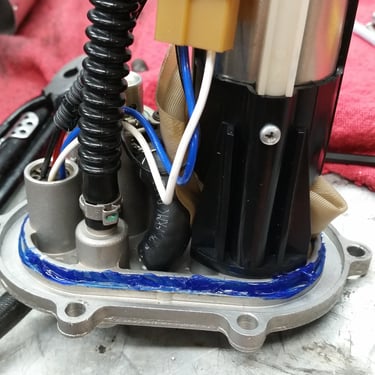
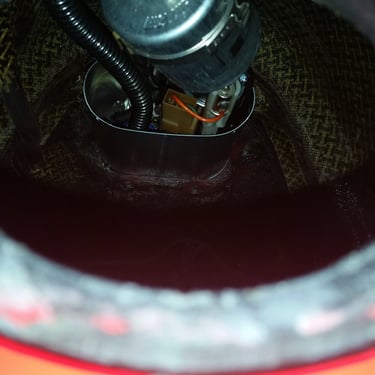
This eliminated the problem completely, which I verified with the DAQ by running a low fuel level and observing that there was no more fuel pressure drops and no more corner exit stumbling. Yipee!